

The true rule: A legacy of sanctity
Discover the foundational principles that guided Saint Alfonso Maria de Liguori and his Redemptorists. This is the authentic Rule and Constitutions, approved by Pope Benedict XIV, charting a divine path to holiness and dedicated service to the most abandoned souls.
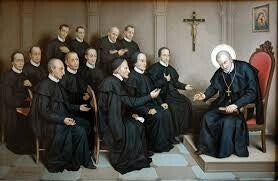
The authentic foundation
This sacred text represents the authentic Rule that Saint Alfonso and his Redemptorists diligently followed. It was the divine blueprint, given by God, that enabled them to pursue holiness, conformity to the will of God, imitation of Jesus Christ. Unlike later revisions, this Rule remained true to its original spiritual purpose, approved by Pope Benedict XIV.

Shaping true redemptorists
The true Rule is the very essence that forges a true Redemptorist! Generations of Redemptorists, prior to the Vatican II council, adhered to these very precepts, with some who became canonised, beatified or made venerable. Saint Alfonso himself references 'the Rule' extensively in his book 'The True Redemptorist' – this is the Rule he meant.
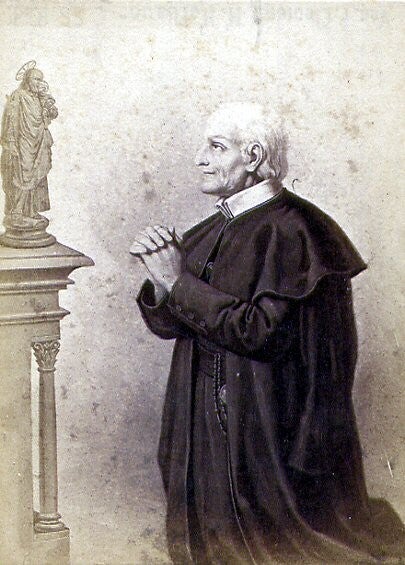
A departure from tradition
Sadly, the modern rule is not the same. Following the Vatican II council, this foundational Rule was altered by men, perceived by some as misguided by pride and spiritual blindness, much in the same vein as the changes to the Latin Mass:
https://www.cssr.in/sites/default/files/CSsR%20constitutions.pdf
https://www.cssr.news/redemptorists-2/rule-of-life-2/general-statutues/
This page bellow upholds the original writting.

The real Redemptorist Constitutions & Rules : you will also find them, 1890 Edition, on this link, page 59
CONSTITUTIONS
AND RULES
OF THE CONGREGATION OF THE PRIESTS
UNDER THE TITLE OF
THE HOLY REDEEMER
BENEDICTUS PAPA XIV
AD PERPETUAM REI MEMORIAM.
« Ad pastoralis dignitatis fastigium, nullo licet merito rum nostrorum suffragio, per ineffabilem divinae sapien tiae atque clementiae abundantiam evecti, ea, quae a Christi fidelibus, quibus, pro salubri societatum aut congregationum pie sancteque institutarum, uberes pietat tis charitatisque fructus, Deo adjuvante atque increment tum dante, proferre jugiter satagentium, felicique per sonarum illis adscriptarum, et pro tempore adscriben darum in via mandatorum Dei, progressu, provide prudenterque constituta et ordinata esse dignoscuntur, ut firma semper atque illibata persistant, apostolici mu minimis nostri praesidio, cum id a nobis petitur, liben ter constabilimus. Exponi si quidem nobis nuper fece rant dilecti filii Alphonsus de Liguori Neapolitanus, aliique presbyteri regni Neapolis, quod ipsi alias, nempe anno 1732, in unum congregati, ut sancti Evangelii mandatis inhaerere, ac proprie, et aliorum Christi fide lium, praesertim eorum qui in apertis planitiis longe ab Evangelicis operariis moram tuahere solent, ani marum saluti consulere valerent, praeviis simplicibus, nempe paupertatis, vitae communis, castitatis, et obedientiae votis sese devinxerunt, et unam societatem, seu congregationem presbyterorum saecularium sancti Evangelii operariorum sub invocatione sanctissimi Salvatoris, cujus dictus Alphonsus perpetuus rector depu- tatus et electus existit, erigi curarunt, ac omnimode, et immediate, ordinariorum jurisdictioni semper re- mansuri sese subjicierunt, ac interea temporis in non- nullis regni Neapolis dioecesibus suas domos erexerunt in quibus de eorum respective ordinariorum licentia sacras missiones, spiritualia exercitia, aliaque pietatis et charitatis opera magno cum animarum progressu peragere, et exercere pergunt, pro felici vero, prospero- que ejusdem congregationis regimine, et gubernio ac pietatis operum directione, nonnullas regulas seu con- situationes, vel statuta per eosdem presbyteros obser- vanda et juxta eorum institutum accommodata, con- dere curarunt tenoris sequentis videlicet. »
POPE BENEDICT XIV
FOR AN EVERLASTING MEMORIAL.
"Having been raised to the summit of pastoral dignity, supported by no merit of our own, but by the ineffable abundance of divine wisdom and clemency, we willingly strengthen with the support of our apostolic office, when asked to do so, those things which are acknowledged to have been providently and prudently established and ordained by the faithful of Christ for the wholesome benefit of piously and holily instituted societies or congregations. These societies, with God's help and granting increase, continually strive to bring forth abundant fruits of piety and charity, and ensure the happy progress of persons enrolled in them, and of those who will be enrolled in the future, in the way of God's commandments, so that they may always remain firm and unimpaired. Indeed, our beloved sons Alphonsus de Liguori of Naples and other priests of the Neapolitan kingdom recently had us informed that they, at another time, namely in the year 1732, gathered together as one. In order to adhere to the commands of the Holy Gospel and to be able to provide for their own salvation and that of other faithful of Christ, especially those who usually dwell in the open plains far from evangelical workers, they bound themselves by preliminary simple vows, namely of poverty, common life, chastity, and obedience. They caused one society or congregation of secular priests, 'Workers of the Holy Gospel,' under the invocation of the Most Holy Savior (of which the said Alphonsus exists as appointed and elected perpetual rector), to be erected. They subjected themselves completely and immediately, always remaining under the jurisdiction of the ordinaries. In the meantime, they erected their houses in several dioceses of the Neapolitan kingdom, in which, with the permission of their respective ordinaries, they continue to carry out and exercise sacred missions, spiritual exercises, and other works of piety and charity with great progress of souls. Indeed, for the happy and prosperous governance and direction of the same congregation and of the works of piety, they caused to be drawn up certain rules or constitutions, or statutes, to be observed by these same priests and accommodated according to their institute, namely of the following tenor."
CONSTITUTIONS
AND RULES
OF THE CONGREGATION OF PRIESTS
UNDER THE TITLE OF
THE MOST HOLY REDEEMER
PURPOSE OF THE CONGREGATION
As the purpose of the Congregation of the Most Holy Redeemer is none other than to unite secular priests in a common life where they strive to imitate the virtues of our Redeemer Jesus Christ, especially in preaching the word of God to the poor; thus the fathers of this congregation, with the permission of the respective bishops to whom they will always be subject, will take care to assist, through missions, catechisms, and spiritual exercises, the people scattered in the countryside and in the small villages who are usually the most deprived of spiritual help. To this end, their houses should be established, as much as possible, outside the cities, at a distance that the local ordinaries and the rector major judge suitable; so that, less distracted and hindered, they may apply themselves to acquiring that spirit which is so necessary for evangelical workers, and for the instruction of the most abandoned souls.
FIRST PART
MISSIONS AND OTHER EXERCISES.
CHAPTER I.
MISSIONS.
I. As one of the principal ends of the institute is to engage in missions, all will apply themselves principally to this work. Missions must be done at the congregation's own expense; it will never be permitted to have these expenses covered by the municipality or by individuals; they will only allow these to cover them when the houses of the institute are not sufficiently provided with income.
II. The subjects for the missions of each house will be named by the local superiors, when the superior general, to whom belongs the government of the whole congregation, has not ordered otherwise. They will always go accompanied on missions; they will be at least two, as much as possible on foot, or at most on horseback, necessity alone allowing them to tolerate going by carriage.
III. In the places that have received missions from the congregation, they will return, within the space of four to five months at most, to give some other public preaching exercise, but shorter and with a smaller number of subjects, in order to strengthen the good of the mission already given.
IV. This custom of the renewal of the spirit, recognized as so useful and so profitable for the good of souls, will always be maintained in the institute; to this end, the houses of the order will be placed in the middle of dioceses, not too far from the towns, for the spiritual benefit of those whom one is accustomed to admit there.
V. So that such an exercise of missions is not neglected, and so that the subjects may always meditate on the end of their vocation which is to come to the aid of the most abandoned souls, they shall not devote themselves to occupations capable of causing distraction; they shall not go to processions or public functions; they shall not direct, either communally or privately, seminaries, cloistered nuns or others; they shall not devote themselves to spiritual exercises (they should only permit themselves these on the occasion of missions), nor to other exercises which take place in the places where the monasteries are located or in the vicinity. And for the same motive, they are forbidden to have parishes or to preach Lenten stations.
VI. Let the subjects of this institute be above all jealous not to give the slightest shadow of bad example; let them conduct themselves in such a way as to always obtain the veneration and esteem of the people; let them not, for motives of charity, let themselves become entangled in affairs of marriage, contracts, wills, purchases, or other affairs, which usually result in the debasement of those involved and the anxiety of the parties; let superiors be placed under the more particular and grave obligation of watching over this matter as something very important.
CHAPTER II.
OTHER EXERCISES.
In order not to leave completely abandoned the souls of the places where the houses of the institute are founded, the subjects will apply themselves particularly to instructing them. This is why they will preach every Sunday in their church, and every Saturday they will give a discourse on the most holy Virgin. They will also give, in their own houses, spiritual exercises to ecclesiastics and to seculars who will come especially around the time of ordinations; provided that in the places of their foundation there are no houses of the reverend fathers of the Mission of Saint Vincent de Paul, who are specially devoted to this institution. If, however, the houses of the Most Holy Redeemer were already founded and in possession of giving the exercises when the said fathers of the mission come to make new foundations, let them remain in their right to give them.
SECOND PART.
OF THE PARTICULAR OBLIGATIONS
OF THE CONGREGATIONALISTS.
CHAPTER I.
OF THE VOWS OF POVERTY, CHASTITY, OBEDIENCE, AND PERSEVERANCE.
§ I.
Of the vow of poverty.
I. The members of this congregation will live perfectly in community and will be uniform in all things. However, each house will provide them with everything necessary: they will be content, like the poor, with a frugal table, without any partiality notwithstanding their different duties or their status. And at the same time that the body is restored, nourishment will be given to the soul by the reading of some spiritual book.
II. The habit of the congregationalists will also be poor, but suitable for honorable priests. The use of silk, bows, and all kinds of vanities or fanciness will be forbidden, as well as the use of anything whatsoever made of gold or silver; outside the churches, the cassock, the cloak, and the stockings will be of ordinary wool, with permission to wear underneath stockings of linen or cotton; shoes will be very simple.
III. The rooms will be small, the furniture poor, but uniform in all things, i.e., a simple table with a drawer without keys; three chairs; four paper images; a crucifix of plain wood; two or three spiritual books besides the Holy Scripture, because if necessary they may have other books of some other kind in the common library, with the permission of the superior, and with the same permission some other necessary small convenience.
IV. Although each congregationalist must be promoted to orders under a title of patrimony, the use of it is forbidden to all. And it will be the same for the income that the subjects might have and for any other kind of goods they might possess. Therefore, everything that comes from what belongs to them will be administered and used by the superiors.
V. As for the small effects they will have for their service, they will only make the use for which the superiors have given them. It will also be forbidden for all to give of what they have, or to receive as a gift or loan for their own use, without permission from the superior.
VI. In conformity with this vow, they will oblige themselves not to accept, either directly or indirectly, any dignities, benefices, or offices whatsoever outside their congregation, and even when they are offered to them, they will be bound to refuse them and renounce them; unless they are obliged to do so by a formal command of obedience, either from the sovereign pontiff or from the superior general. All this will be observed with the most scrupulous exactitude under very grave penalties, up to that of dismissing the guilty from the congregation. If even a superior, were he superior general, is fully convicted of having, through weakness, allowed innovation against poverty, he must be deposed from his position and deprived of active and passive voice.
VII. It is never permitted to beg, in whatever need they find themselves; they must then await the help of divine Providence; it will only be permitted, in case of grave necessity, to make it known to one of the benefactors.
VIII. Since the congregationalist always retains the ownership of his goods, he may dispose of them only for the benefit of his family, and if he does not dispose of them in their favor, he must leave them to the congregation; but the congregation will never accept legacies or donations from those who have poor relatives; and in doubt of the poverty of the relatives, the case will be referred to the proper ordinary of the congregationalist.
IX. The income of each house cannot rise above the sum of 1500 ducats, income suitable to maintain the church, the fabric, twelve priests, and seven serving brothers, who at most may dwell in one house; except for the houses of study, of novitiate, and the house where the superior general resides, which, being able to contain a greater number of subjects, may also allow their revenues to grow to the sum of 2000 ducats.
§ II.
Of the vow of chastity.
This virtue being very dear to the Son of God, and absolutely necessary for an evangelical worker, let the subjects of this congregation be very attentive to preserving it; let them be especially prudent in their dealings with persons of the other sex; let them not go into the houses of penitents or other lay people without an urgent motive, and without express permission from the superiors, and always with the companion designated by the superior.
§ III.
Of the vow of obedience.
I. The subjects of this congregation must profess complete obedience to the ordinaries of the places where they find themselves, in everything that concerns the manner of acting, unless this is forbidden by the constitutions.
II. They will likewise render exact obedience, first to all their rules and constitutions, of which they will be very faithful observers, and moreover to all orders, to all dispositions of their superiors, so that one might say of them that they no longer have anything of their own will; but that everything is in the hands of those who govern them. Let them use all kinds of respect towards their superiors, let them never make excuses or defend themselves before them, and let them receive with humility all their admonitions.
III. They will not be permitted to write letters without the express permission of their superiors to anyone whatsoever, except to the superior general and his councilors; nor to receive, without the same permission, other letters than from these. In the same way, they will not eat or drink anything outside of meals; they will not go to the garden or terrace, nor to the refectory, nor to the kitchen, nor into each other's rooms.
IV. They are forbidden above all to admit strangers into the house, still less into their own room. But, if necessary, they will be received in the places intended for this purpose.
§ IV.
Of the vow of perseverance.
They will add to the other already mentioned vows the vow of perseverance. By this vow, the subjects will oblige themselves to live in the community until death, and to request dispensation from it only from the sovereign pontiff or from the superior general, who will always have the freedom to dismiss subjects who are not edifying; although he must always weigh the reasons seriously before God, and proceed to this dismissal especially with great uprightness and without any passion.
CHAPTER II.
OF THE FREQUENTATION OF THE SACRAMENTS, OF PRAYER, AND OF SOME EXERCISES OF HUMILITY.
§ 1.
Of the frequentation of the sacraments.
-
The priests will strive to give all possible edification, and will live in such a way as to be able to celebrate holy Mass worthily every day; for this they will confess at least once a week; the superior of the house with his council will send two confessors for this purpose.
II. Those who are not priests will receive communion on all feast days of precept, and on Wednesday and Friday of each week; they will confess twice a week. For the greater profit of the brothers, there will be in each house a spiritual prefect to instruct them in the principles of the faith and in the observance of the rules.
III. The superior must be very attentive to ensure that the sick are given the last sacraments of viaticum and extreme unction in a timely manner. And when a sick person is in danger, let him not fail to have a priest to console and assist him.
§ II.
Of prayer and exercises of humility.
I. In all houses where this can be done conveniently, the canonical hours must be recited in choir, evenly, with recollection of spirit, without chant or tone.
II. Mental prayer will be made at three times of the day: morning and evening in common, during the day in private in one's own room, using half an hour each time. These meditations will be made especially on the theological virtues, on the life and virtues of Jesus Christ, which they must imitate in a living manner in their own persons. They will take each month as their goal one of these virtues, in order to practice it better and exercise it particularly, making their particular examinations and their spiritual conferences on this subject.
CHAPTER III.
OF SILENCE, RECOLLECTION, MORTIFICATION, AND CORPORAL PENANCES.
§ I.
Of silence and recollection.
The life of the congregationalists must be a continual recollection; to practice this, they will have at heart first the exercise of the presence of God, often rousing themselves to short but fervent ejaculatory prayers; they will love retirement, they will not leave their rooms without necessity, and above all they will keep silence, which is so praiseworthy in institutes. In the evening after the sound of the Ave Maria until morning, before the hours are recited in common, one may absolutely not speak, nor have errands done without express permission from the superior, except only during the hour of morning recreation and the three hours following; in the church, in the choir, in the sacristy, in the kitchen, in the refectory, in the dormitory, one will not speak, except for some need, in few words and in a low voice. The superior will strictly require observance of this rule from his subjects.
§ II.
Of mortification and corporal penances.
I. Christian mortification must be even more at heart to evangelical workers in order to draw abundant fruits from their apostolic labors; so also the members of this institute will apply themselves principally to mortifying their interior, to conquering their passions, to renouncing their will in all things, seeking, following the example of the apostle, to delight in the sorrows, contempt, and humiliations of Jesus Christ.
II. Regarding corporal penances, they will fast on all vigils of the Holy Virgin; during Advent and the novena of the Holy Spirit, they will eat dairy products, and the evening meal will be more substantial than on days of fasting of the Church. On two days of each week, Wednesday and Friday, they will take the discipline all together; they will sleep on straw, although it is permitted to use wool pillows and ordinary linen sheets. The beds will regularly be seven palms long and three and a half wide.
III. So that these evangelical workers are not too indiscreet in afflicting their bodies, all must take the assigned recreations, which will ordinarily be one hour after dinner, and one hour after supper; they will all assemble in the same place, and on one day of each week they will not be permitted to do any corporal penance or to burden themselves with too many fatigues without the permission of the superiors and spiritual directors.
IV. They will use no kind of vain scents. They will not be permitted to go hunting of any kind, to play any game whatsoever, and especially to go to their relatives' homes. This will only be allowed with express permission from the superiors, in the case of a serious illness of father or mother, or other urgent necessity. The guardians and superiors will be very zealous for this observance.
CHAPTER IV.
OF DOMESTIC MEETINGS.
I. At the four Ember weeks of each year, the superior will assemble all his subjects, and having had these constitutions read in common, he will point out the defects, and paternally advise what he believes expedient for their exact observance. Although, furthermore, the constitutions must be read each Saturday at supper; each subject must have them near him, and consider them often to make them familiar.
II. Moreover, each week the superior will give a spiritual conference to all the subjects, and each will accuse himself of his faults against the rules. Each week also, the priests and students will meet with the superior of the house to discuss the manner of doing missions well, the faults to avoid, the means of succeeding well according to the most holy purpose of the institute; finally, each week in each house, a conference will be held on cases of conscience or dogmatic theology, at which all the priests of the house will come well prepared to respond.
THIRD PART.
OF THE GOVERNMENT OF THE CONGREGATION
CHAPTER I.
OF THE SUPERIOR GENERAL AND OTHER DIGNITARIES.
§ I.
Of the superior general and his councilors.
I. The congregation will be governed by a superior general appointed for life. He will take the title of rector major. He will be elected by the general chapter; but his election must unite at least two-thirds of the votes; one cannot elect a superior who has not already lived ten years with edification in the congregation, who would not have reached the age of thirty-five, and who would not have, moreover, during the exercise of missions, held the office of local rector or councilor.
II. The superior general may choose for his residence the house that appears most suitable to him. He will have absolute authority in what regards the internal or domestic government over all the houses and subjects of the congregation; as to what concerns the exterior, the subjects must live under the jurisdiction of the bishops; as for the subjects who must be promoted to orders, they will always be promoted by the bishops who would ordain them if they did not live in congregation.
III. It belongs to the superior general to elect all the other superiors of houses, the admonitors, the two councilors of each local jurisdiction, the masters of novices, the masters of students, the visitors, and the lecturers; he may also change them at will, provided there are sufficient reasons for doing so; but ordinarily he will not change them before three years.
IV. The acceptance of new foundations and the designation of the seat also belong to the superior. The power to receive or dismiss subjects is also his responsibility. If the subjects who wish to be admitted are subdeacons, the superior general may receive them without the vote of his councilors; if they are not subdeacons, to admit them the majority vote of the councilors, who in this case will have decided, is required; but one must never admit young people who have not completed their seventeenth year.
V. The principal duty of the superior general must be to watch attentively over the observance of the rules and constitutions of the institute, and to set an example, by being the first to practice them. He will severely punish transgressors, especially if they are superiors, without respect of persons. To this end, he will make, each year, by himself or by his visitors, the visitation of all the houses.
VI. The superior general will never be permitted to renounce his office without very grave reasons, and without his resignation being accepted by the general chapter.
VII. The superior general will have councilors who will be given to him by the chapter, with whom he will examine each month the most important affairs of the institute, especially when it concerns the election of local superiors, visitors, masters of novices, the erection of new houses, and abandoning one already founded, dismissing from the institute subjects already received, and similar things. He will never be obliged to abide by the advice of the consultors, since their vote will be only consultative; but it will be fitting, however, that most of the time he conform to the majority or the sounder part of them.
VIII. The superior general will secretly write, during his lifetime, the nomination of the vicar general who will govern the congregation after his death; but this must be an inviolable secret. The government of the vicar will last until the election of the new superior, which will take place by the general chapter; and if such a designation is not found made, the councilors of the deceased superior will proceed immediately to such an election.
IX. The superior general therefore being dead, the vicar named by him or elected by the council will assemble the general chapter within the space of six months at most. In this chapter will assemble the procurator general, the councilors of the deceased superior, the directors of houses, each of whom will bring with him a companion deputed by the chapter of each of the houses, a chapter composed of all the priests of the house. All will have a voice in the chapter and the faculty to propose what they judge suitable for the maintenance of observance and the greater advantage of the institute.
X. At the same time of the general chapter, the six councilors of the superior general will be chosen, who will remain in this office for as long as the superior is in his charge. Among these must necessarily be the monitor of the superior general and the secretary of the chapter, who will likewise be elected by the same chapter.
XI. If ever one of the councilors were missing in any case, let him always be replaced by the superior general and by his other councilors by the majority of votes, because it does not belong to the superior alone to replace him.
XII. To provide for the disorders which are accustomed to arise inevitably in communities and to renew ever more and more the rigorous observance of these rules, the chapter must assemble every nine years in the place that the superior general will designate, and there the state of each house will likewise be examined. The chapter will have the authority to form new statutes for the common good of the congregation, always in conformity with and in no way contrary to the constitutions and the rules. It may also, for reasonable motives, annul and change the orders of the superior general and of the other chapters.
XIII. If the conduct of the superior general were such that he appeared worthy of being deposed, his councilors will have the right to assemble the general chapter for this purpose, which may depose the superior general, provided that two-thirds of the votes are against him. To this end, each of the councilors may call the others, they must unite all together, and having agreed to convoke the chapter, they will be free to announce it.
§ II.
Of the monitor of the superior general.
The general chapter will give to the superior general a monitor who will be the ex officio councilor of the superior, and must examine his conduct; and, if he does not find it in conformity with the rules and constitutions of the institute, in matters however of importance, and which could cause great harm to the congregation; for example, if through his weakness he allowed the relaxation of some observance of the rule to be introduced, the monitor will warn the superior with great charity and humility; if the latter does not amend and the disorder is serious, the monitor will be obliged to warn the other councilors, to consider the expedients deemed most opportune, and also the convocation of the chapter.
§ III.
Of the procurator general.
In the chapter where the superior general is elected, a procurator general for the whole institute will likewise be elected, who, like the councilors, will remain in his office for as long as the superior general remains in his. His duty will consist in doing all the business of the congregation that will be entrusted to him by the superior general or by the chapter. He will take care of the revenues left to the entire body of the congregation, to use them for the purpose that the benefactors have designated; or if no purpose has been specified, to use them for whatever the superior and his councilors judge suitable. He must render an account of the administration of these revenues to the superior and his councilors every six months. If the procurator general should die, the election of a new one must take place in the same manner as for a missing councilor.
§ IV.
Of visitors.
I. Since the superior general is charged, each year, with the visitation of all the houses of the congregation, when he is prevented, he may designate other visitors from the same institute, provided they are of mature age and great edification.
II. The visitors will have the powers given to them by the superior general: they will, however, leave opportune orders in each of the houses they visit for the good governance and for the greater stability of the observance of the rules; they will report everything to the superior general.
§ V.
Of the local rector and other dignitaries.
I. The local superiors will have the care of each house. The superior general will give them a monitor destined to watch over their conduct; if the monitor knows that the superior has failed and takes little care to require observance, he must first warn him fraternally and with humility, and if he does not amend, he will give notice to the superior general. He will likewise give him two councilors with whom he will consult once a month on the affairs of the house; they will review together the accounts and the Mass books.
II. Superiors will not, without the advice of the monitor and their councilors, incur expenses above ten scudi; and when these expenses exceed the sum of one hundred scudi, permission from the superior general will be necessary.
III. Superiors or their procurators, in transactions, agreements, acceptances of legacies, or in any way whatsoever that the goods of the house are to be used, especially for taking money at interest, besides the permission of the apostolic see or the ordinary, must have written permission from the superior general.
IV. The local rector will choose for himself a companion who will have the title of minister. This one will assist the superior in the care of the house, and in his absence will have its governance; during this time he will conform in all things to the regulations and practice of the superior.
V. In each house or college, besides the superior, there will be no more than eleven priests and seven serving brothers; only in the houses of novitiate or study, or in that where the superior general resides, may there be a greater number.
VI. The local superior will require each month, the account of conscience from all his subjects and will visit the rooms of each of them.
CHAPTER II.
OF THE QUALITIES REQUIRED IN SUBJECTS TO BE RECEIVED.
I. It belongs to the superior general, as we have already said, to receive clerics or other subjects into the body of the congregation. He himself, or another deputed by him, will take exact information of the talent and habits of those who wish to be admitted, especially concerning the motive of their vocation; if they have sisters or poor relatives; if they have debts or have committed any offense; if they are of legitimate birth. One must never admit a person who would bring a mark or stain to the ministry itself.
The councilors will take the same information for the acceptance of young men who are not subdeacons, their vote being necessary, as has been said, for this acceptance.
II. The secretary of the congregation will note distinctly in a book the day, month, and year of the reception of subjects.
III. Thus accepted, they will be tested for some time with their own clothing, and, after fifteen days of spiritual exercises, they will be admitted to the novitiate; clerics for one full year, serving brothers for two years, and priests of mature age for at least six months, if the superior general so judges, will await, under the care and authority of a master of novices, until they have acquired the virtues necessary for their vocation. If they have behaved well during this year of trial, with the permission of the superior general, after another fifteen days of more rigorous spiritual exercises, they will be admitted to the oblation to make the simple vows of chastity, poverty, obedience, with the vow and oath of perseverance to the congregation which accepts them; from which vows and oath they can only be released or dispensed by the sovereign pontiff or the superior general, and they must always make them with this condition.
IV. Profession being made, the subjects will apply themselves to study; but they will nonetheless be under the care of a spiritual prefect until they are ordained. For ordinations, permission from the superior general will always be asked; and ordinarily subjects will not go out to work before the age of thirty, although, during this time, the superior of the house may, in case of need, employ them with the permission of the superior general.
V. Although the transgression of these rules and constitutions is not a sin, superiors must procure their observance with all possible zeal; they will not be easy in granting dispensation from them, except in case of necessity; the respective local superiors and their council must examine when the need is particular to some subject; but for dispensations touching the common of the congregation, they will have recourse to the superior general, who, with the advice of his councilors, may grant them, but not forever; reserving to the general chapter the faculty of granting general and perpetual dispensations for very grave causes.
« Cum autem sicut eadem exposito subjungebat dicti exponentes praesertas constitutiones, seu regulas aut statuta quo firmius subsistant, et serventur exactius, apostolicae confirmationis patrocinio communiri summopere desiderent, nos specialem ipsis exponentibus gratiam facere volentes, et eorum singulares personas a quibusvis excommunicationis, suspensionis et interdicti, aliisque ecclesiasticis sententiis, censuris et pecnis a jure vel ab homine quavis occasione, vel causa latis, si quibus quomodolibet innodata existunt, ad effectum praesentium tantum consequendarum seriè absolventes, et absolutas fore censentes supplicationibus eorum nomine, nobis super hoc humiliter porrectis inclinati de venerabilium fratrum nostrorum S R. E. cardinalium concilii Tridentini interpretum, ad quos supplicem libellum porrccum, remisimus, qui relationem dilecti filii nostri Josephi ejusdem S. R. E. presbyteri cardinalis Spinelli nuncupati, ex concessione et dispensatione apostolica metropolitana ecclesiae neapolitanae præsulis, ad eosdem cardinales transmissam attenderunt ac votum dilecti iidem filii nostri Joachimi S. R. E. præfatae presbyteri cardinalis Besutii nuncupati ad hujusmodi negotium examinandum ab eadem cardinalium congregatione deputati, perpenderunt consilio institutionem primodata presbyterorum congregationis sub titulo Sanctissimi Redemptoris, ac praesertas constitutiones, seu regulas, aut statuta, auctoritate apostolica tenore præsentium confirmamus, et approbamus illisque inviolabilis apostolicæ firmitatis robur adjicimus. Decernentes easdem præsentes litteras semper firmas, validas et efficaces existere, et forc suosque plenarios et integros effectus sortiri et obtinere, ac illis ad quos spectat, et pro tempore quando cùmque spectabit plenissimè suffragari, et ab eis respective inviolabiliter observari, sicque in præmissis per quoscumque judices ordinarios, et delegatos etiam causarum palatii apostolici auditores, judicari, et definiri debere ac irritum et inane si secus super his a quoquam quavis auctoritate, scienter vel ignoranter contigerit, attentari. Non obstantibus constituionibus, et ordinationibus apostolicis caeterisque contrariis quibuscumque, volumus autem ut præsentium litterarum transumptis, seu exemplis etiam impressis manu alicujus notarii publici subscripti, et sigillo personæ in ecclesiastica dignitate constitutæ munitis, eadem prorsus fides tam judicio, quam illud ubique adhibeatur, quæ ipsis præsentibus adhiberetur, si forent exhibitæ, vel ostensæ. Datum Romæ apud Sanctam Mariam Majorem sub annulo piscatoris, die vigesima quinta februarii millesimo septingentesimo quadragesimo nono, pontificatus nostri, anno nono. »
D. Cardinalis Passioneus.
Loco annuli piscatoris in cera rubea impressi.
"Moreover, since, as the same petition added, the said petitioners greatly desire that the afore-inserted constitutions or rules or statutes be strengthened by the protection of apostolic confirmation, so that they may stand more firmly and be observed more exactly; We, wishing to grant special favor to the petitioners themselves, and by this document absolving their individual persons, and considering them to be absolved, from any sentences of excommunication, suspension and interdict, and other ecclesiastical sentences, censures and penalties issued by law or by man on any occasion or cause, if they are in any way bound by them, solely for the purpose of obtaining the effect of these presents; being inclined by the supplications humbly presented to us on their behalf in this matter, and having remitted to our venerable brothers, the cardinals of the Holy Roman Church who are the interpreters of the Council of Trent, the petition that was presented to them, [those cardinals] considered the report of our beloved son Joseph Spinelli, also a cardinal priest of the same Holy Roman Church, named, by apostolic grant and dispensation, the prelate of the metropolitan church of Naples, which was transmitted to the same cardinals. And they weighed the opinion of our equally beloved son Joachim Besozzi, likewise named a cardinal priest of the aforesaid Holy Roman Church, deputed by the same congregation of cardinals to examine this matter. By their advice, the institution of the aforementioned congregation of priests under the title of the Most Holy Redeemer, and the afore-inserted constitutions or rules or statutes, We, by apostolic authority and by the tenor of these presents, do confirm and approve, and We add to them the strength of inviolable apostolic firmness. Decreeing that these same present letters shall always exist and be firm, valid and effective; that they shall obtain and attain their full and complete effects; that they shall most fully support those to whom they pertain, and whenever in the future they shall pertain; and that they shall be inviolably observed respectively by them. [Decreeing] that in the premises they must be so judged and defined by any ordinary judges and delegates, including the auditors of cases of the apostolic palace; and that whatever may be attempted to the contrary on these matters by anyone, knowingly or ignorantly, by whatever authority, is null and void. Notwithstanding any apostolic constitutions and ordinances and anything else to the contrary whatsoever. We will, however, that transfixes or copies of these present letters, even printed, subscribed by the hand of a notary public and secured with the seal of a person constituted in ecclesiastical dignity, be given the same complete faith everywhere, both in court and elsewhere, as would be given to these presents themselves, if they were exhibited or shown. Given at Rome, at Saint Mary Major, under the Fisherman's ring, on the twenty-fifth day of February, one thousand seven hundred and forty-nine, in the ninth year of our pontificate.
D. Cardinal Passioneus.
Place of the Fisherman's ring, impressed in red wax.
"St. Mary Magdalene de Pazzi used to say, that the observance of the Rule is the shortest way to eternal life and to sanctity."
Saint Alfonso Maria de Liguori, The true spouse of Jesus Christ
Create Your Own Website With Webador