

"The True Redemptorist": an ideal lost?
Saint Alfonso Maria de Liguori, our anti-liberal holy founder, penned a definitive work outlining the very essence of a 'True Redemptorist'. These pages delve into his vision, exploring the virtues and practices he envisioned for his Congregation, and reflect on how this profound ideal could be fulfilled in today's world.

The founder's blueprint: saint Alfonsos's vision
In his profound writings, Saint Alphonsus de Liguori meticulously described the character and mission of a 'True Redemptorist'. This foundational text serves as a timeless blueprint, guiding those called to imitate the virtues of Jesus Christ and to preach to the most abandoned souls. It is a model of unwavering dedication and spiritual fortitude.

A divergence: where do modern Redemptorists stand?
When one examines the wishes of Saint Alphonsus, a question arises: are his founding principles still faithfully observed by contemporary Redemptorists? Few believe that the distinctive anti-liberal path outlined by our founder has, unfortunately, been largely abandoned. We think that divine grace and virtue have blossomed anyway in the souls of our contemporary Redemptorists, maybe in different ways, as noone can stop the Work of the Holy Ghost.
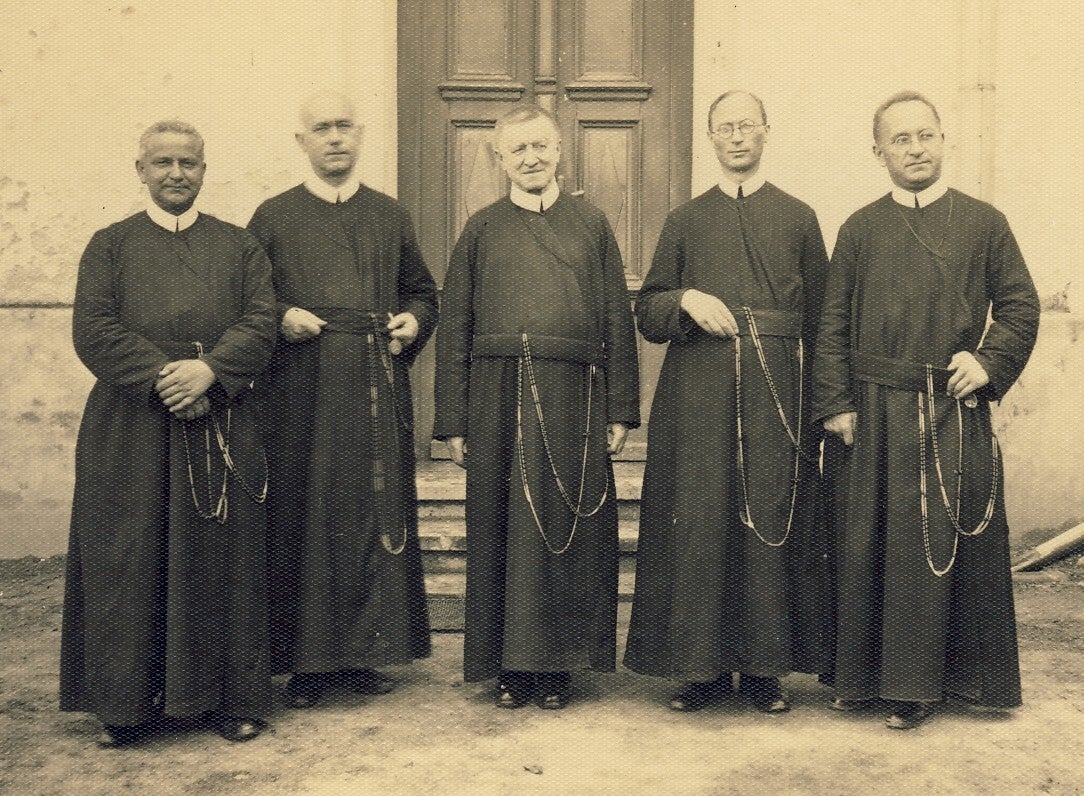
Embodying the ideal: lives before Vatican 2 Council
To truly understand the 'True Redemptorist', one needs only to look at the lives of the Redemptorists who served prior to the Second Vatican Council. Their devotion, their adherence to the founder's strictures, and their unwavering focus on the most abandoned truly exemplified the distinctive and special path Saint Alphonsus laid out. These inspiring lives offer a glimpse into a time when the founder's vision was actively lived. But surely there are plenty of Redemptorists today who have the holy desire to love God, Our Lady and saint Alfonso as much as God wishes. The future is in God's hands.
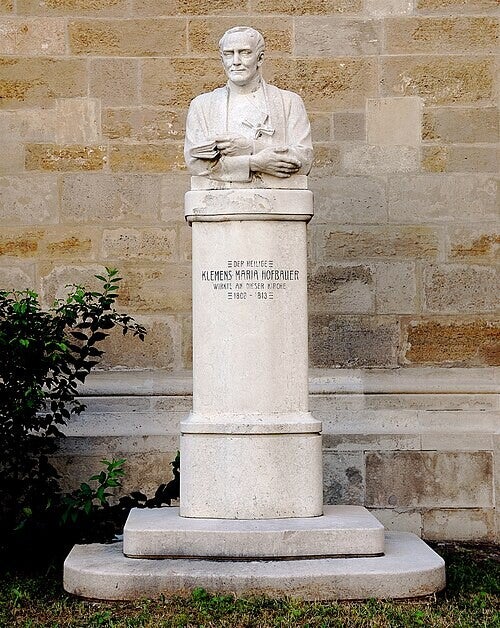

The True Redemptorist
by saint Alfonso Maria de Liguori, C.Ss.R
From The Manuale presbyterorum Congregationis Sanctissimi Redemptoris, German Edition, 1911
This description of "the true Redemptorist" is a faithful excerpt from § II of the golden booklet "Instructions on the Vocation to the Religious State" by St. Alphonsus de Liguori. The first edition, which we follow here, was intended by the author exclusively for the members of his Congregation, while the subsequent editions of the "Instructions" were dedicated to all religious institutes where the rules are still faithfully observed.
The purpose of the Institute of the Most Holy Redeemer consists in the most faithful possible imitation of the most holy life and conduct of Jesus Christ, who led a life in this world that was detached from all things and completely mortified, full of sorrows and contempt. Consequently, whoever decides to enter our Congregation must at the same time decide to suffer and to deny himself in all things, as our Lord Jesus Christ himself demands of his faithful followers. "If anyone wishes to come after me, let him deny himself, take up his cross, and follow me!" Si quis vult post me venire, abneget semetipsum, et tollat crucem suam et sequatur me. Matt. 16:24. Whoever wishes to enter our Congregation must therefore strengthen himself in the resolve to suffer, and indeed to suffer much, so that he may not later be in danger of succumbing to temptations when the hardships and discomforts of the poor, mortified life led in the Congregation begin to oppress him.
There are many who, upon entering a fervent religious society, do not choose the right means to attain peace and holiness, as they focus only on the advantages they hope to find there, namely, solitude, quiet, freedom from disturbances, from family ties and disputes, independence from the world, and freedom from worries about housing, food, and clothing.
Without any doubt, each of us has great obligations in this regard towards the Congregation, which frees him from so many worries and grants him the advantage of serving God perfectly in peace, as it constantly provides him with so many aids for the salvation of his soul, so many good examples from his confreres, and so much instruction from his Superiors, who watch unceasingly over his well-being, and which offers him so many beneficial exercises for attaining eternal life. All of this is true; but in order not to lose such precious advantages, one must at the same time resolve to take upon oneself, and indeed willingly, the hardships one also finds in the Congregation. For if these are not accepted with love, they do not grant that perfect peace which God bestows only on those who know how to overcome themselves in order to please Him. "To the victor," He says, "I will give hidden manna." Vincenti dabo manna absconditum. Rev. 2:17. For the peace that God grants His faithful servants to taste is a hidden one. It is not understood by worldly people. When they see the mortified life of religious, they are not inclined to envy them, but rather they pity them and declare them unhappy on earth. They see their mortifications, says St. Bernard, but they do not see the inner contentment that God lets them enjoy: crucem videntes, sed non etiam unctionem. It is true that there is suffering in the spiritual life; "but," says St. Teresa, "as soon as one resolves to suffer, one no longer has suffering." Rather, these sufferings are transformed into true joys. "My daughter," the Lord once said to St. Bridget, "the sheepfold of my graces is surrounded by thorns; but everything turns into sweetness for him who overcomes the first stings."
Who can comprehend the consolations that God gives His beloved souls to enjoy in prayer, at holy Communion, and in solitude, those illuminations, that holy fire of love, those holy unions of God and the soul, that peace of conscience, and that blessed hope of eternal life? Only he who experiences it knows it. "A single drop of divine consolation is worth more than all the consolations and pleasures of the world," says St. Teresa. This God, who so gladly bestows benefits, knows how to give a foretaste of eternal bliss, even in this valley of tears, to him who suffers in order to please Him. Thus the words of David are precisely fulfilled: "Lord, You place seeming labor in the fulfillment of Your commandments." Qui fingis laborem in praecepto. Ps. 93:20. By announcing to us that in the spiritual life there is toil, weariness, and even death to suffer, the Lord acts as if He were imposing something burdensome on us; but in reality it is not so, because the spiritual life grants to him who gives himself entirely to God that peace which, according to the words of the Apostle, surpasses all understanding: Exsuperat omnem sensum (Phil. 4:7), that peace, namely, which surpasses all the pleasures of the world and worldly people. We see, then, that a member of our Congregation is more content in a poor cell than all monarchs in their palaces. "Taste, then, and see how sweet the Lord is." Gustate et videte, quoniam suavis est Dominus. Ps. 33:9. He who has not experienced this cannot understand it.
On the other hand, however, one must also be convinced that a person, even if he had already entered the Congregation, will never attain the enjoyment of that true peace if he does not resolve to suffer and if he does not overcome himself in adversities. Vincenti dabo manna absconditum. Rev. 2:17. It is therefore absolutely necessary that everyone who wishes to belong to the Congregation of the Most Holy Redeemer form, at his entry, the most decisive resolve to overcome himself in all things and to banish from his heart all inclinations and desires that do not have God as their starting point and ultimate goal. He must therefore detach himself from everything, but principally from four things: 1. from the comforts of life, 2. from his relatives, 3. from self-esteem, 4. from self-will.
1. Detachment from the Comforts of Life. Besides the vows of chastity and obedience, besides the vow and oath of perseverance, from which only the Pope or the Rector Major can grant a dispensation, in our Congregation, after a one-year novitiate, the vow of poverty and of renunciation of every dignity, office, and benefice is also taken. According to this vow of poverty, as the Rule says, no one may ever possess anything as property, not even a pin, no life annuity, no money, or anything whatsoever. The Congregation will take care to provide each one with necessities.
Taking the vow of poverty, however, will not yet suffice to transform someone into a true follower of Jesus Christ, if he does not cheerfully take upon himself all the discomforts of poverty. "Not poverty in itself, but the love of poverty is a virtue," says St. Bernard. Non paupertas virtus reputatur, sed paupertatis amor, i.e., to attain holiness, it is not enough to be poor, if one does not also love the hardships of poverty. "Ah, how many would like to be poor and like Jesus Christ," says the devout Thomas à Kempis, "but they must lack nothing." Volunt esse pauperes, sed sine defectu. In short, they would like to have the honor and reward of poverty, but without feeling the discomforts of poverty. It is easy to understand that a religious in the Congregation will not seek superfluous things, e.g., silk clothes, delicate foods, costly furniture, etc.; but he might perhaps wish for necessary things that he lacks. However, one recognizes that someone truly loves poverty when he lacks even necessities, namely concerning clothing, blankets, food, etc., and yet remains content and is not troubled. What kind of poverty would that be that he would have to endure if he lacked none of the necessities? Father Balthasar Alvarez of the Society of Jesus says that whoever loves poverty must also love the effects of poverty, i.e., according to his explanation, cold, hunger, thirst, and contempt: frigus, famem, sitim et contemptum. Regarding the bed, the rule of our Congregation has determined that one sleeps on straw and that the blankets are of ordinary wool. Clothing must also be of wool, as well as stockings. Undergarments shall be of coarse linen. In all these matters, everyone must not only be content with what has been given to him, without ever asking for something that, perhaps through the forgetfulness of the one distributing, was not given to him (for that would be a great fault), but he must also be prepared to endure, at times, even the lack of the meager items which the rule permits to have, as was said before. This lack is particularly felt in the present, entirely new foundations, which are not yet endowed with the revenues they will later enjoy after the death of the founders. There, the Congregation is truly not even able to grant its members the little just mentioned. Hence it happens that sometimes there is a lack of clothing, blankets, linen, food, and other things of this kind; one tries to manage as best as possible. Everyone must be content with the little that has been given to him, without grieving or becoming troubled when he sees that he lacks even necessities. Whoever does not have this spirit should not even think of entering our Congregation; for that would be a sign that he has no vocation for this or that he does not even have the will to absorb the spirit of the Institute. St. Teresa says: "Whoever enters the house of God to serve Him must consider well that he has not come here to be treated well by God, but to suffer for God."
2. Detachment from Relatives. Whoever wishes to enter our Congregation must also detach himself from his relatives and forget them completely; for in our Congregation detachment from relatives is practiced to the highest degree, in order to follow in all things the teaching of Jesus Christ, who said: "I have not come to bring peace on earth, but the sword; for I have come to set a man against his father." Non veni pacem mittere sed gladium; veni enim separare hominem adversus patrem suum. Matt. 10:34. He also gives the reason immediately, saying: "A man's enemies will be those of his own household." Inimici hominis domestici ejus. Especially in the vocation to the religious state, where it is a matter of leaving the world, one finds no greater adversaries than one's parents, who partly out of self-interest, partly out of attachment, make their children turn away from their vocation and thus prefer to become enemies of God rather than give their consent. Ah, how many parents will we one day see damned in the Valley of Jehoshaphat, because they robbed their children or relatives of their vocation! And how many children will also be damned because, in order to please their parents and not have to separate from them, they lost their vocation and the salvation of their souls! Hence the warning of the divine Redeemer: "If anyone does not hate his father and mother, he cannot be my disciple." Qui non odit patrem suum et matrem ... non potest meus esse discipulus. Luke 14:26. Whoever wants to belong to the Congregation of the Most Holy Redeemer and become a true disciple of Jesus Christ must therefore resolve to renounce his relatives completely. If someone has later entered the Congregation, he should know that he must continually practice the same detachment. He should also know that he may not enter his parents' house, except in the case of a fatal illness of his father or mother or in a pressing emergency, and even this only with the permission of the Superiors. With the exception of these cases, it would be considered a serious fault and a great scandal in our Congregation if anyone were to go to his parental home without express permission; indeed, it would already be considered a great imperfection to ask permission or to express the wish to see or speak with his parents. St. Charles Borromeo said that every time he had visited his family, he had returned with less fervor. Likewise, anyone who goes to his parents on his own initiative and without express permission should be convinced that he will return either with illusions or cooled in fervor; for even if he had been in the Congregation for ten years, his parents would hardly be able to refrain from urging him to return to them. But even assuming he did not change his mind, he will return from the parental house agitated by passion. Consequently, everyone should know — and he should not feel offended if this measure is applied to him — he should know that he will never be allowed to go alone to his family in the Congregation, but that a companion will always be given to him, and this is done inexorably for everyone. He should also know that no one may write to his parents or friends without first having obtained permission and having shown the letter to the Rector. Otherwise, he would be guilty of a very serious offense, which is not tolerated in the Congregation but is severely punished; for thousands of disorders detrimental to vocations could arise from it. This is enforced with even greater strictness during the novitiate year; for during this time, novices are not easily allowed to speak with their parents or write to them. Furthermore, it should not be overlooked that it is a significant fault if someone, in case of illness, were to ask permission or express the wish to go to his family to recover his health, in order to be better cared for there and to enjoy the beneficial effect of the home air. The air of the parental home is almost always, or even always, harmful and pernicious for the soul of the members of the Congregation. Should someone want to justify his desire to be cared for by his parents by saying he does not want to burden the Congregation with the cost of medicine, he should be firmly convinced that the Congregation devotes all possible care to the sick and shows them the greatest love. If the air where he is staying is not beneficial to him, the Superiors will see to it that he is sent to another of our houses; and as for medicine, in case of need, they would even sell books to help the sick person recover. Therefore, there is no fear that divine Providence will let him suffer want. If the Lord does not want his recovery, he must resign himself to the divine will, without even mentioning the parental home with a single word. For him who enters the Congregation, there is nothing more desirable than to die, when it pleases God, in the house of God, with the assistance of his confreres, and not in a worldly house amidst his relatives.
3. Detachment from Self-Esteem. One must be detached from all self-esteem. Many leave their homeland, their comforts, their parents, but they retain attachment to their self-esteem, and this attachment is the worst of all. The greatest sacrifice we can offer to God consists in renouncing not only riches, pleasures, and family, but also in dying to ourselves. This is the self-denial that Christ urges upon all who wish to follow Him. But if one wants to deny oneself, one must begin by trampling underfoot all self-esteem, by desiring and accepting all conceivable contempt that may befall us in the Congregation. Such are: being placed after other confreres in whom one perhaps finds less merit; being regarded as unfit for offices; or being assigned the lowest and most burdensome tasks.
One must be firmly convinced that in the house of God there are no more sublime and honorable offices than those imposed on us by obedience. God forbid that any member of the Institute should ever express the wish or desire to obtain some distinguished office or task. That would be something very strange in the Congregation. Whoever had such an attitude would be regarded as proud and ambitious; and rightly he would deserve punishment and would have to be mortified particularly in this regard. It would perhaps be better for the Congregation to perish than to have to see this accursed pest of ambition insinuate itself, which disfigures even the most flourishing monastic communities and mars the most beautiful works of God wherever it creeps in. With the grace of Jesus Christ, in our little Congregation the scandal is not found that a member thereof should seek an office that could bring him applause, whether it be to become Superior, to preach, or to hear confessions, and the like; and we hope that such a scandal will never be found among us. Rather, anyone who sees himself tempted and despised by his confreres should even feel an inner consolation. I say: an inner consolation; for as far as the flesh is concerned, it is impossible for him to rejoice over it. But one should not be troubled if one notices that the flesh feels hurt; it is enough if the spirit accepts this humiliation and rejoices in it in its higher part. Indeed, even if someone is constantly criticized and humiliated by everyone, not only by his Superiors but also by his confreres and subordinates, he should thank wholeheartedly and calmly the one who criticizes him and has the charity to correct him. He should answer that he will be more careful in the future and not fall back into the same fault.
One of the most ardent desires of the saints on earth has always been to see themselves despised out of love for Jesus Christ. St. John of the Cross desired this one day when our Lord appeared to him in His suffering form and said to him: "John, what do you wish to receive from me?" Joannes, pete, quid vis a me? And the saint replied: "Lord, to suffer and be despised for You." Domine pati et contemni pro te. The theologians teach, with St. Francis de Sales, that the highest degree of humility consists in taking pleasure in setbacks and humiliations. This is also one of the greatest merits we can acquire with God. A single contempt, borne patiently out of love for God, has greater value before Him than a thousand scourgings and sermons. Moreover, one must know that even in the holiest monastic communities one cannot escape the necessity of suffering humiliations, whether from Superiors or from confreres. Just read the lives of the saints! What mortifications did not a St. John Francis Regis, a St. Francis Hieronymo, a Father Torres, and others have to endure! The Lord permits that even among saints certain natural aversions, which are however without sin, or also certain differences of inclination occur between persons of higher perfection, which then give rise to many causes of adversity. Often, something that is based on delusion and does not actually exist will also cause annoyance. God Himself permits this so that the congregated members may exercise themselves in patience and humility.
In short, whoever does not patiently bear contempt and adversities will gain little in the Congregation, not to say that he will lose much. Whoever enters the Congregation to give himself entirely to God should be ashamed not to be able to bear even a humiliation, especially when he places himself in the presence of Jesus Christ, who was filled with shame out of love for us. Saturatus opprobriis. Let everyone, therefore, pay great attention to this point; let him resolve to take joy in humiliations of every kind and hold himself ready to endure many sufferings in the Congregation; indeed, many will actually befall him. Otherwise, the anxieties arising from poorly borne adversities and contempt can torment him so much that he loses his vocation and is expelled from the Congregation. How many have already lost their vocation because of such impatience under humiliations! If someone cannot bear even a reproach out of love for God, what is such a one in the eyes of God and in the Congregation? How can someone who becomes so sensitive and restless immediately when humiliations occur say that he is dead to himself, which he promised Jesus Christ upon entering the Congregation? Out of the Congregation of the Most Holy Redeemer with such members who are so attached to their own self-esteem! Out with them! It is good if they leave as soon as possible, so that they do not also poison the others with their pride. In the Congregation, everyone must be particularly dead to self-esteem; otherwise, one does better not to enter at all or, if already entered, to leave again.
4. Detachment from Self-Will. Whoever enters the Congregation must renounce his own will completely and subject it entirely to holy obedience. This is what is necessary above all else. What use is it to leave the comforts of life, parents, and honors, if one then brings one's self-will into the Congregation? In the renunciation of self-will consists perfect self-denial. By this one dies spiritually to oneself and thereby gives oneself entirely to Jesus Christ. Giving Him our hearts, i.e., our wills, that is the sacrifice which pleases Him most and which He demands from the members of this Congregation. All mortifications, all prayers, and all other kinds of detachment will be of little use if one does not achieve complete detachment from self-will and perfect denial of it.
Without any doubt, this is the greatest merit we can attain with God. It is also the one and sure means to please Him in all things, so that then everyone can say with Jesus, our Redeemer: "I always do what pleases Him." Ego, quae placita sunt ei, facio semper. (John 8:29). It is certain that he who lives in the Congregation without self-will can confidently say that he pleases God in all his actions, whether he studies, prays, hears confessions, goes to the refectory, to recreation, or to rest; for in the Congregation, so to speak, there is no step and no breath that is not taken out of obedience to the rules or to the Superiors.
In the world, and even among people who devote themselves to piety, the value of this obedience in religious life is not recognized at all. It is indeed true that outside the religious state there are many people who exert themselves greatly and who perhaps exert themselves even more than those who are under obedience; they preach, perform penances, pray, and fast. But the motive force of all this is, for the most part, and perhaps for the greatest part, self-will. God grant that on the day of judgment they may not have cause to sigh, according to the words of Holy Scripture: "Why have we fasted, and You have not seen it? Why have we humbled our souls, and You have taken no notice?" Quare jejunavimus, et non aspexisti? Humiliavimus animas nostras, et nescisti? "Because on the day of your fasting, your self-will was found." Ecce in die jejunii vestri invenitur voluntas vestra. Is. 58:3. St. Bernard says of these words: "Self-will is a great evil; for it causes the good you do not to be good for you." Grande malum propria voluntas, qua fit, ut bona tua tibi bona non sint. Whoever, on the other hand, does everything out of obedience is assured that he pleases God in all things. The Venerable Mother Mary of Jesus said that she valued her vocation to the religious state especially highly for two reasons: first, because in the cloister one constantly enjoys the company and presence of Jesus in the Most Holy Sacrament of the altar; second, because there, through obedience, one belongs entirely to God, by offering Him one's self-will as a sacrifice.
Father Rodriguez relates that after the death of Dositheus, who was a disciple of St. Dorotheus, the Lord revealed that Dositheus, who had lived in obedience, notwithstanding his sickliness, which did not permit him to join in the rigorous exercises of the other monks, nevertheless through the virtue of obedience attained the reward of a St. Paul the Hermit and a St. Abbot Anthony.
Whoever, therefore, wishes to enter the Congregation must resolve to renounce his self-will completely and to will nothing other than what holy obedience prescribes. God forbid that anyone in the Congregation should ever utter the words: I will, or I will not! Rather, he must, under all circumstances, even when asked by the Superior what he wishes, always answer only: I will what obedience wills. In all that is not clearly a sin, he must obey blindly and without further examination whatever is commanded him; for the examination of matters and the resolution of doubts is not his duty, but the duty of the Superior. Whoever wants to practice obedience and does not submit his own judgment to the judgment of the Superiors, his obedience is still imperfect. St. Ignatius of Loyola says that prudence in matters of obedience belongs not to the subordinates but to the Superiors, and if prudence may occur in obedience, it can only consist in obeying without prudence.
In order to practice the so important virtue of obedience successfully, one must constantly maintain one's mind in a state of readiness to carry out everything that is most contrary to one's inclinations, and moreover, one must be prepared to bear calmly when one sees that everything one seeks and desires is denied. It can happen that one is most occupied with external work precisely when one longs for solitude in order to pray or study. It is indeed true that in the Congregation, as far as possible, a solitary life is led when one is in the monastery. It is also true that our houses are to be founded outside populated areas so that we can enjoy the advantage of solitude. It is equally true that we have many hours of silence, furthermore the annual ten-day retreat with strict silence, likewise a day of recollection each month, besides the fifteen days of retreat before clothing and also fifteen days before the day of oblation on which the vows are taken — nevertheless, one must know that as priests we have to lead an active life and must work for the salvation of souls. If, therefore, a congregated member is continually assigned to this by obedience, he must be content with the time that is devoted among us to prayer and the other exercises, and be prepared to omit even these sometimes, without raising objections or becoming troubled. This St. Mary Magdalene de' Pazzi understood so well when she said: "Everything done out of obedience is prayer."
But it can also happen that the one who most longs to be used for work in the missions for the salvation of souls, to preach, hear confessions, study, and the like, is precisely the least used for it. He will be forbidden to study, left at home alone while the others go out, and so on. Then he must be convinced that he pleases God most precisely by fulfilling obedience, and therefore he must accept this with the same joy and calm as if he were used for work and for the missions. God forbid that any member in the Congregation should ever wish or express the desire to preach, go on missions, etc. This fault, which would be a very serious one, does not, thank God, occur in the Congregation. One must also know: the more someone desires such things, the more they will be denied him, and the more he will be mortified in this regard. The sole desire of all must be to will only what obedience wills. What value, indeed, would all these efforts have before God, even if they were imposed by the Superiors themselves, if the Superiors were guided not by what God inspires in them, but by the whims of the subordinates? God would not grant His assistance to such works, and the subordinates would derive little benefit from them.
If, therefore, someone wanted to enter the Congregation mainly in order to give missions, preach, etc., he should not enter. For this attitude proves that he is not called to this Institute. Only he has the spirit of the Institute who presents himself with the desire to practice obedience, and with the willingness to bear calmly being completely set aside and used for nothing, who is satisfied when good is done by others, and who only does what is assigned to him directly by obedience without his own intervention. Still less should anyone think of entering the Congregation if he had the intention of training himself in preaching, hearing confessions, etc. Such a one would certainly not be called by God, but driven by the devil to enter there for his own ruin and to the detriment of the Congregation. One must consider that our houses are not seminaries or schools, but religious houses, which one may only enter if one is determined to die in them.
But even if someone had entered the Congregation with a true vocation and had overcome all his passions and all earthly interests, he should still not imagine that he will be spared new temptations and trials, e.g., weariness, darkness, vain fears, and other tribulations that God Himself will send him to strengthen him in his vocation. We know that even those saints who possessed the greatest love for their vocation were sometimes oppressed by great spiritual darkness, so that it seemed to them they were deceived and could not be saved in this state. Such things happened to St. Teresa, St. John of the Cross, and St. Jane Frances de Chantal. But they took refuge in prayer, and these darknesses disappeared and inner peace returned. Thus the Lord tests those He loves most, as was said to Tobias: "Because you were pleasing to God, it was necessary that temptation should prove you." Quia acceptus eras Deo, necesse fuit, ut tentatio probaret te. (Tob. 12:13.) And in the book of Deuteronomy it says: "The Lord your God is testing you, to make it known whether you love Him or not." Tentat vos Dominus Deus vester, ut palam fiat, utrum diligitis eum, an non. (Deut. 13:3.)
Therefore, let everyone be prepared to bear his share of trials in the Congregation. Sometimes it will seem to him that he cannot endure the way of life of the Institute, that he can no longer find peace there, indeed, cannot even be saved. But the greatest caution is to be used when the temptation comes under the pretext of doubts or with the illusion of a higher spiritual good, in order to rob someone of his vocation. Against such temptations there are only two effective remedies. The first is recourse to prayer. "Approach God," says the Psalmist, "and you will be enlightened." Accedite ad eum et illuminamini. (Ps. 33:6.) It is impossible for him who takes refuge in God not to gain victory over temptation; but it is equally impossible for him who does not commend himself to God to overcome temptation. Nor should it be overlooked that to overcome such temptations, it is sometimes not enough to take refuge in God only once or for a few days. Perhaps God permits the temptation to continue even after prayer for weeks, months, and even years. But let us be firmly convinced that he who does not cease to commend himself to God will finally certainly be enlightened and remain victorious. Thereafter, he will receive greater peace and greater firmness in his vocation than before. As long as someone has not experienced this storm, which attacks most people, he should not consider himself safe. Note well, during such times of darkness, one can expect neither fervor nor enlightenment from ordinary sources of consolation, because in the midst of this darkness one sees nothing but confusion. Then one should only pray to God: "Lord, help me!" One should very often take refuge with the Most Blessed Virgin Mary, the Mother of Perseverance, with firm trust in the divine promise: "Ask, and you shall receive!" Petite et accipietis. Whoever emerges victorious from such storms with God's grace will most certainly then find double rest and satisfaction in his vocation.
The second remedy, which is equally important and necessary in such trials, consists in revealing openly, and without delay before it gains strength, the temptation by which one is oppressed, to one's Superior, or also to one's spiritual director, whom one has chosen in the Congregation. St. Philip Neri used to say that a temptation that is revealed is already half conquered. On the other hand, there is no greater danger in such cases than not revealing the temptation to the Superiors, partly because God withdraws His enlightenment due to the lack of trust shown by the subordinate in concealing his temptation, and partly because the temptation, as long as it remains hidden, grows ever stronger.
Whoever has temptations against his vocation and does not reveal them will most certainly lose his vocation, of this one may be firmly convinced. But let it be well noted that in the Congregation, temptations against one's vocation are the most dangerous that hell can stir up, because hell gains many victories at once if it triumphs; for indeed, if a congregated member has once lost his vocation and left the Congregation, how much good will he still be able to do on the path of God? It is indeed true that the enemy will whisper to such a one that he will now enjoy deep peace and be able to do more good outside the Congregation; but he should be prepared, as soon as he has left the Institute, to be tormented by such inner remorse of conscience that he will find no rest. God grant that this remorse does not also torment him throughout eternity in hell, into which, as has been said before, he who through his own fault has lost his vocation very easily falls. Moreover, he will find himself so downcast and so discouraged in the practice of good that he will no longer possess the strength even to raise his eyes to heaven. By this, however, it very easily comes to pass with him that he gives up prayer entirely; for every time he wants to give himself to it, he will feel a whole hell of remorse within himself. His conscience will make the bitterest reproaches to him: Wretch, what have you done? You have abandoned God! You have lost your vocation! And why? To follow your whims, your parents, etc. Such a one may be assured that he will feel this remorse for life. But he will feel it most especially at the hour of death, in view of eternity, because, instead of dying in the house of God and in the midst of the good members of the Congregation, he will be surprised by death outside the Congregation, perhaps in his own house, in the midst of his relatives, for whose sake he incurred God's displeasure. Unceasingly should the members of our Congregation beseech the Lord that He would rather let them die than fall into such a great misfortune, the gravity of which is felt all the more at death because there is then no means left to rectify the error. Whoever, therefore, has temptations against his vocation can, during their duration, make no better meditation than to consider what torment the reproach of conscience will cause him at the hour of death, that he whimsically lost his vocation and that now, through his own fault, he must die outside the Congregation.
Finally, it is to be noted that everyone who wishes to enter the Congregation must resolve to become holy, to endure all kinds of external and internal sufferings out of love for God, and never to lose his vocation. Whoever does not have this disposition is asked not to deceive the Superiors and himself, but to stay outside; for this is a sign that he is not called to this, or, which would be an even greater evil, that he does not want to follow God's call as he ought. With such a bad disposition, he does better to wait outside the Congregation until he has come to the firm resolve to give himself completely to God and to suffer all things out of love for God. In the opposite case, he only harms himself and the Congregation, because he will likely leave again easily afterwards. But then, not only has he lost all confidence in the eyes of the world, but he has also incurred greater guilt before God through his infidelity to his vocation; he will lose confidence to take even one more step on the paths of God, and God knows what mischief and ruin will follow thereafter.
In short, it is truly beautiful to see in the Congregation souls who have given themselves entirely to God. They still live in the world, but yet, as it were, outside the world, since they think of nothing else but giving joy to God. In the Congregation, everyone should live only for eternal life. O how happy we are if we give the short time of our life entirely to God! To this, those are most obliged who have already devoted a considerable part of their life to the world. Let us only keep eternity vividly before our eyes, and we will bear all sufferings with calm and peace. Let us thank God that He has given us such enlightenment and such means for attaining His perfect love, and has chosen us before so many others for this Congregation as His own property, and has given us the gifts of His holy love. Let us be very zealous in acquiring all virtues, so that we may please Him. We must think like St. Teresa, who said to her daughters, that after having left the world and its goods, we have perhaps, with God's grace, already overcome the hardest part in striving for holiness, so that only the lesser part of the work for attaining holiness remains for us. I hold it as certain that Jesus Christ has prepared a very exalted place in His paradise for all who die in the Congregation. In this world we will be poor and despised and treated as enthusiasts and fools; but in the next life we will have a different lot. Let us always commend ourselves to our most loving Redeemer in the Most Holy Sacrament, as also to the Most Blessed Virgin Mary, because indeed all members of the Institute have the duty to love Jesus in the Most Holy Sacrament and the Immaculate Virgin Mary with very special love, and then we may be full of confidence. Jesus has chosen us to belong to the great ones of His court. The most striking proof of this is the protection He grants to our Congregation and to each of its members. "The Lord is my light and my salvation; whom shall I fear?" Dominus illuminatio mea et salus mea; quem timebo? (Ps. 26:1.)
Complete Your work, O Lord, and bring it about for Your glory that we belong entirely to You, so that the members of this Congregation may be perfectly pleasing to You until the day of judgment and may gain an immense number of souls for You. Amen! Amen!

"The sorrowful truth: the path not taken"
One important thing to understand is this: does what defined a 'True Redemptorist' according to Saint Alfonso de Liguori still find its full expression today? His deepest wishes, once the guiding star of the Congregation, are now, regrettably, not followed by some modern Redemptorists. This page serves as a reminder of a profound legacy and a poignant reflection on a cherished ideal.
Create Your Own Website With Webador